
Socorro, Cocos, or Galapagos? - Top 3 Big Animal Diving
The Eastern Pacific Ocean attracts some of the biggest fish and is one of the best destinations to dive with big animals: Endangered species such as whale sharks, giant oceanic manta rays, and many species of sharks including schooling hammerhead sharks, silky sharks, Galapagos sharks, white tip reef sharks and many more. If you are lucky, you may even encounter humpback whales and orcas, or have a massive tuna zip by you.


Here is our list of the top 3 big animal diving hotspots in the Eastern Pacific Ocean, starting from the north...
1. Socorro Islands, Mexico
The Revillagigedo Archipelago is also commonly referred to as Socorro Island, one of the 3 islands in the archipelago that also includes San Benedicto Island and the world-famous Roca Partida. This island chain is located 240 miles southwest off the coast of Cabo San Lucas in Mexico and is an easy 8 to 9--night trip for scuba divers residing in the Americas. Most trips to Socorro last 8 nights and the crossing from Cabo to Socorro typically takes about 24 hours.


Photos by Bluewater Travel advisor Tim Yeo. Photographed while diving Socorro in December.
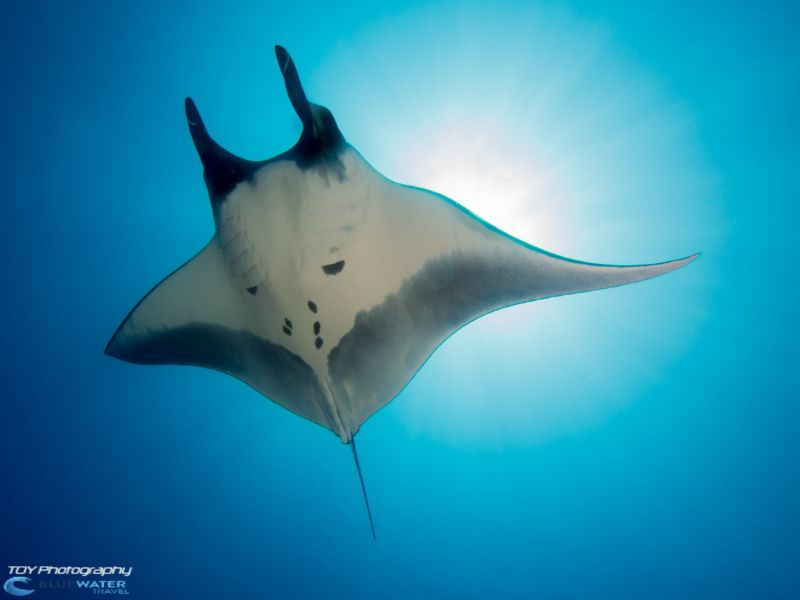
While it is the most unknown destination of the 3 listed here, Socorro is the best destination to get close and intimate with massive oceanic manta rays. The mantas approach divers, and seem to enjoy bubbles on their belliesoften staying just inches above divers' heads.
The bottlenose dolphins in Socorro are also very curious and comfortable with divers. They often approach divers, and it is not uncommon to hear stories of dolphins presenting themselves vertically for divers to scratch them under their pectoral fins.
Another amazing sight involves dozens of white tip reef sharks stacked on top of each other in every available crevice of Roca Partida.


There is a season for whale sharks (May and November) and a season for baitballs (May). Humpback whales also migrate to Socorro late February and stay into late March, offering divers a chance to catch a glimpse of them while diving.


Learn more about diving Socorro or view all Socorro liveaboards.
Check out trips with Rocio del Mar or from our Preferred Partners Pelagic Fleet.
Dive Information
- Diving season: November to May
- Visibility: 40 to over 100 feet
- Water temperature: 72 to 82 degrees Fahrenheit
- Depths: 100+ feet
- Conditions: Occasional currents
- Favorite dive site: Roca Partida
Join our next trip:
Socorro Warm Water Pelagic Trip November 2024
2. Cocos Island, Costa Rica
Located about 340 miles off the coast of Costa Rica, Cocos Island is one of the wettest places on earth. The entire island has been a Costa Rican National Park since 1978, and the result is an abundance of marine life congregating in its waters. Jacques Cousteau called Cocos Island "the most beautiful island in the world." You will pass by a dozen waterfalls on your 10-minute boat ride to the dive site during the wet season.
The only way to get to Cocos is via a 36-hour motor from the Pacific side of coastal Costa Rica on a dive liveaboard for a 10-night trip.


The main attraction in Cocos Island is hammerhead sharks visiting their cleaning stations. Scalloped hammerheads swim onto the reef at sites like Manuelita to look for barberfish who will happily clean them of parasites. Divers position themselves a couple of feet from the cleaning stations and simply watch the show in front of them. The hammerheads come so close they sometimes bump photographers cameras.


Dusk/night dives are also a favorite among divers. Hundreds of white-tip reef sharks use divers lights to hunt for reef fish hiding in the crevices of the reef. Once prey is spotted, a frenzy often starts with a dozen white-tip reef sharks battling each other for a meal.


Note: The authorities in Cocos currently do not allow night dives, but diving at dusk is still allowed.
Cocos is a year-round destination, with June/July and Oct/Nov being the peak seasons.
Learn more about diving Cocos Islandor view all Cocos liveaboards.
Find out about scuba diving Costa Rica.
Dive Information
- Diving season: All year round
- Visibility: 40 to over 100 feet
- Water temps: 65 to 80 degrees Fahrenheit
- Depths: 100+ feet
- Conditions: Typically strong currents and surge
- Favorite dive site: Manuelita
Learn more:Read our 2020 Cocos Island Trip Report
3. Galapagos Islands, Ecuador
The Galapagos Islands are every topside and underwater naturalist's dream destination. This global treasure is where Charles Darwin found inspiration for his Theory of Natural Selection...and he did not even explore underwater!
Consisting of 21 volcanic islands spread across the northern and southern hemispheres, Galapagos is home to some of the highest levels of endemic species. Some of the favorites include the giant Galapagos tortoise, marine iguana, Galapagos penguin, and flightless cormorant. The blue-footed booby and the great frigatebird are also favorite amongst birders.


There is good diving on most of her islands, but divers know that the best diving in the Galapagos is at the 2 northern islands of Wolf and Darwin. These 2 islands are isolated from the rest of the archipelago and are visited by large pelagics due to the presence of the cold, nutrient-rich Humboldt current. A dive liveaboard is the only way to visit these 2 islands. Most liveaboards depart from either San Cristobal (SCY) or Baltra (GPS) so make sure you check which embarkation port you are departing from.


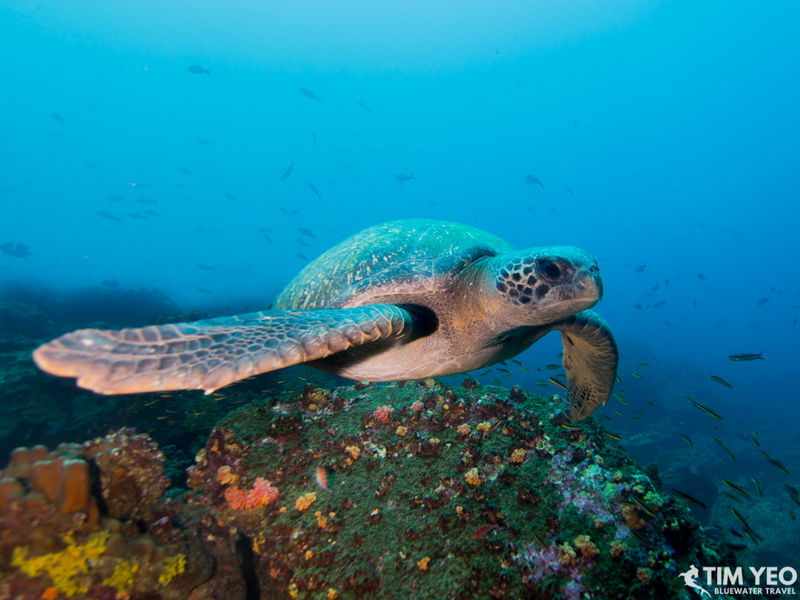
Divers come from all over the world to dive with massive schools of scalloped hammerhead sharks (January to June - warm season) and gigantic whale sharks (July to December). Expect the unexpected here. It is not uncommon to spend the whole dive with a school of bottlenose dolphins, see schools of yellowfin tuna, schools of Mobula Rays and eagle rays, tiger, silky and Galapagos sharks, Galapagos sea lions, manta rays (Cabo Marshall) mola molas (Punta Vicente Roca), marine iguanas (Cabo Douglas), and even orcas.


Learn more about diving Galapagos or view all Galapagos liveaboards.
Dive Information
- Dive season: All year round
- Visibility: 20 to over 100 feet
- Water temps: 62 to 82 degrees Fahrenheit
- Depths: 80-100 feet
- Conditions: Typically strong currents
- Favorite dive sites: Elephant Rock, Wolf Island
Join our photo workshop:
May 7 - 17, 2026 Galapagos Photo Workshop
Conclusion
All three destinations listed above are amazing big animals diving destinations. If you could do all, you should! However, if you have to decide between diving Socorro, Galapagos or Cocos, the following summary will help you choose!
- Socorrooffers easy access from the United States and most parts of the world. Overall it's more affordable than Galapagos and Cocos, but offers the best interactions with giant manta rays, along with a lot of sharks.
- Galapagosis as great topside as it is underwater. The number of endemic species that you can encounter here is mind-blowing. There is a chance to see almost anything in the Galapagos including sharks, whale sharks, sea lions, mantas, mola molas and many more. Beware though, the water can be colder than the other 2 destinations, so you would need to come fully prepared!
- Cocos Islandis similar to the Galapagos' Wolf & Darwin islands, hosting a lot of sharks including massive schools of hammerheads. The difference is that you will only dive Wolf and Darwin for 2-4 days of your trip in the Galapagos, while in Cocos you will be diving the 'Island of the Sharks' every day!
For another big animal diving destination, try scuba diving Bali for manta rays and mola mola.
Book Your Next Dive Trip
If you're looking for that 'next big trip' - hopefully this list of East Pacific's best big animal divingdestinations has helped either add some new ones or help prioritize your list! If you have any questions on any of the above locations, or any others, please
and our travel advisors would be happy to help!We are a full-service scuba travel agency - so we can help get you booked on any of the group trips that we have listed above, or help arrange a trip just for you! We'll provide recommendations and get you booked on any boat or resort and help sort out your flights, transfers, and just about everything else you need to have an amazing trip--all that at no additional cost than doing it all yourself.
, call us at +1-310-915-6677 or write to us throughthe live chat box to start planning your trip!


